Small-Town Oregon Living: Getting To Know Myrtle Point
April 16, 2026
April 16, 2026
Looking for a quieter Southern Oregon lifestyle without giving up access to the coast? Myrtle Point offers exactly that kind of balance. If you want a small-town setting, a more traditional housing mix, and a practical location in Coos County, this community is worth a closer look. Here’s what you should know before deciding whether Myrtle Point fits your next move.
Myrtle Point is a small inland city in Coos County, set in the Coast Range foothills along the South Fork Coquille River. According to the City of Myrtle Point community profile, it sits about 15 miles from the Pacific Ocean and serves as a gateway to the South Coast via Highway 42.
That location gives you an alternative to living directly on the shoreline. You can stay connected to coastal destinations while enjoying a more inland, small-town setting.
Myrtle Point is compact in both size and population. The city reports 2,475 residents in 2020, and Census Reporter estimates 2,684 residents in its 2024 ACS profile.
The city covers about 1.62 square miles and sits 92 feet above sea level overlooking the Coquille River Valley, based on the official city profile. Census Reporter also shows a median age of 45.3, compared with Oregon’s 40.4, which points to a somewhat older-than-state-average population.
For buyers, that often translates to a quieter pace and a community where established homes and long-term residents are part of the local character.
Myrtle Point has deep roots. The city history page says the area was first settled in the early 1860s, incorporated in 1887, and developed around timber, agriculture, and railroad connections.
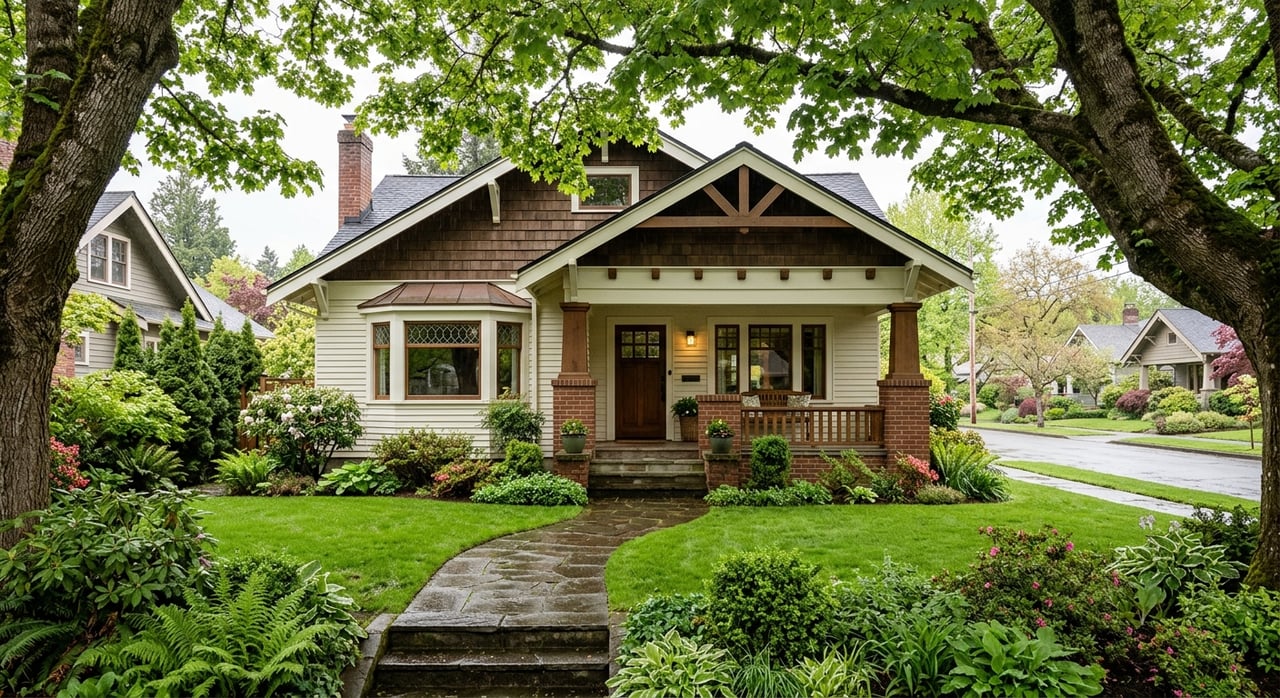
That history still shows up in the built environment today. The city notes that many historic homes and buildings remain, which helps explain why Myrtle Point feels established rather than newly built.
If you enjoy places with a visible sense of continuity, this is one of the town’s strongest draws. You are not just buying a house here. You are stepping into a community with a long local story.
Small towns often depend on a few key gathering places, and Myrtle Point has several. The city highlights Lehnherr Park and local parks and recreation features, including a park at the west end of the downtown commercial district.
Another local landmark is the Coos County Logging Museum, which the city identifies as a 1910 building listed on the National Register of Historic Places. It adds to the town’s historic identity and gives downtown another recognizable anchor.
Myrtle Point also has a strong annual calendar. The city lists community events such as the Town Wide Garage Sale, the Coos County Fair and Rodeo, the Harvest Festival, and Christmas Lights the Night. For many buyers, that kind of recurring local rhythm is a big part of the appeal of small-town living.
If you are thinking about day-to-day convenience, Myrtle Point covers the basics in a compact footprint. Myrtle Point School District 41 lists Myrtle Crest Elementary, Maple Middle School, and Myrtle Point High School.
The city also maintains four parks, which adds to the town’s everyday usability. For library services, the Flora M. Laird Memorial Library serves Coos and Curry counties and provides research help, e-books, and device assistance, according to the district and city information in the research.
This is not a large urban center with every service around the corner. But if you prefer a smaller community where core amenities are close at hand, Myrtle Point offers a practical setup.
If you are expecting rows of new subdivisions, Myrtle Point may feel different from many larger Oregon markets. Census Reporter data shows 1,256 housing units, a 68.3% homeownership rate, a median property value of $252,900, and a median household income of $47,656.
The housing mix leans strongly toward detached homes. A Point2Homes census-based housing summary shows about 67% of units are detached single-family homes, with a median construction year of 1958.
Older homes are a notable part of the market here. The same source reports that 30.3% of homes were built before 1940, which lines up with the city’s description of its remaining historic homes and buildings.
In practical terms, buyers may find:
For people who appreciate character, history, or a less uniform housing landscape, Myrtle Point offers a more varied inventory than many newer communities.
One of Myrtle Point’s biggest advantages is that the market is not limited to in-town houses. A current Homes.com acreage page for Myrtle Point shows active interest and availability in acreage properties.
That matters if you want extra space for hobbies, equipment, gardens, animals, or a more rural feel while staying near town. It also supports the idea that Myrtle Point can appeal to buyers looking for land, hobby-farm potential, or a little more breathing room than a standard neighborhood lot provides.
For a boutique brokerage like Coast Properties Group, this kind of inventory fits naturally with buyers who are exploring not just homes, but also acreage and lifestyle properties across the Southern Oregon Coast region.
Myrtle Point works best if you are comfortable with a car-dependent lifestyle. Census Reporter shows that 69.6% of workers drove alone to work, with an average commute time of 24.7 minutes, and households averaged about two cars.
That data helps set expectations. Myrtle Point is not built around dense walkability or transit-heavy living. Instead, it tends to fit buyers who value space, simplicity, and a quieter setting enough to make driving part of the normal routine.
Based on the town’s scale, housing stock, and location, Myrtle Point may be a strong fit if you are looking for an inland alternative to coastal living. It can also make sense if you are drawn to older homes, established neighborhoods, or acreage on the edge of town.
This community may especially appeal to:
The local age profile, historic character, and practical location all support that picture. Myrtle Point is less about trendy growth and more about steadiness, space, and connection to the surrounding landscape.
Every town has tradeoffs, and Myrtle Point is no exception. If your priority is new construction, a highly urban lifestyle, or a wide range of large-city amenities, this may not be the right match.
But if you value a compact community, established housing, and reasonable proximity to the coast, Myrtle Point deserves a serious look. It offers a distinct version of Southern Oregon living that feels grounded, local, and practical.
If you are exploring Myrtle Point or other Coos County communities, working with a local team can help you compare in-town homes, rural properties, and lifestyle fit with more confidence. When you are ready to take the next step, connect with Coast Properties Group | eXp Realty, LLC for local guidance on homes, acreage, and opportunities across the Southern Oregon Coast.
April 16, 2026
April 2, 2026
March 24, 2026
March 5, 2026
February 19, 2026
February 5, 2026
We're here to make your real estate dreams a reality, and we're just a call or click away. Let us be your guides and put our experience of 25+ years to work towards finding your piece of paradise in Bandon or the surrounding Southern Oregon Coast. Discover Bandon through our eyes, get in touch, and let's start your real estate journey together.

COAST PROPERTIES GROUP
125 BALTIMORE AVE SE STE A BANDON OR 97411